
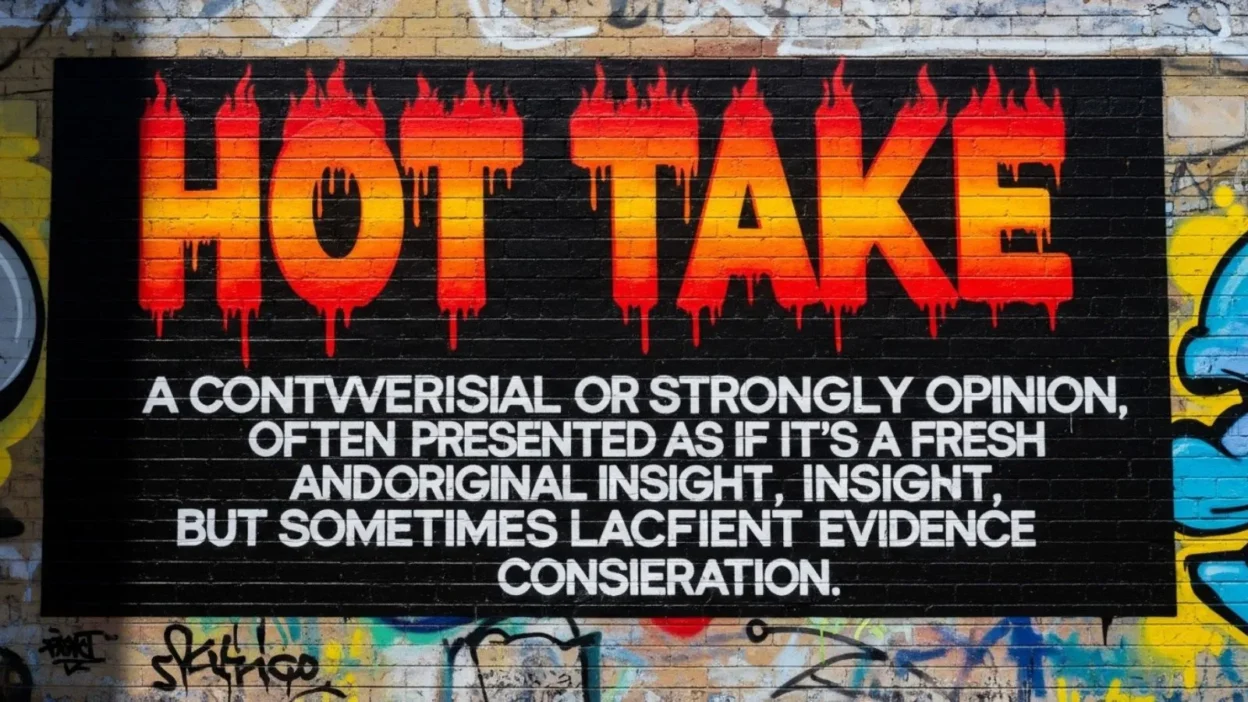
In today’s fast-moving world of social media, you’ve probably come across someone sharing a bold opinion and calling it a hot take.
If it’s on TikTok, X (formerly Twitter), Instagram, or Reddit, hot takes are everywhere and they often grab attention instantly. But what exactly is the Hot Take Meaning, and why do people use it so often online?
A hot take is usually a quick, strong, and sometimes controversial opinion that’s shared without deep analysis.
It’s designed to spark reactions, start debates, or even go viral. Some people enjoy hot takes for their honesty and entertainment value, while others see them as shallow or attention seeking.
Understanding the hot take meaning can help you better navigate online conversations and express your own opinions more effectively.
In this article, we’ll break down its definition, origin, examples, and how you can use it correctly.
What Does Hot Take Mean? 🔥
A hot take refers to a bold, quick, and often controversial opinion that is shared to attract attention or spark discussion. It is usually something people say or post without deep research or long analysis, but it still creates a strong reaction from others. In simple terms, the hot take meaning is an opinion that stands out because it is surprising, unusual, or slightly provocative.
Hot takes are very common on social media platforms like X (Twitter), TikTok, Instagram, and Reddit, where users often compete for engagement. For example, someone might say, “Pizza is overrated,” or “Summer is better than winter,” and label it as a hot take. These statements are not necessarily true or false—they are just designed to start a conversation.
One important thing to understand is that a hot take is not the same as a well-researched argument. It is more about instant reaction than deep explanation. Sometimes hot takes are funny or entertaining, but other times they can be serious and even controversial.
People use hot takes for different reasons: to express personality, to join trending topics, or simply to go viral. In internet culture, the more unexpected the opinion, the more likely it is to get attention.
So, when you hear the term “hot take,” think of it as a quick-fire opinion meant to grab eyes and trigger reactions, rather than a carefully crafted or deeply analyzed viewpoint.
Origin of the Term Hot Take
The phrase “hot take” originally comes from the world of American sports journalism. It was first used to describe quick, bold, and often emotional opinions shared by commentators right after a game or major sports event. These opinions were usually delivered without much time for reflection or detailed analysis, which made them “hot” in the sense of being fresh, immediate, and sometimes impulsive.
Over time, the term moved beyond sports media and entered mainstream internet culture. With the rise of social media platforms like Twitter (now X), Reddit, and YouTube comment sections, people began using “hot take” to describe any strong opinion shared online—especially those that sparked debate or disagreement. As online discussions became faster and more reactive, the term naturally fit into everyday digital conversations.
Today, the hot take meaning has expanded far beyond its original use. It is no longer limited to sports or professional commentary. Instead, it is widely used in entertainment, politics, pop culture, and even casual daily conversations. Anyone sharing a surprising or controversial opinion online might have it labeled as a hot take.
This evolution shows how internet culture reshapes language. A term that once belonged to a specific field has now become a global slang expression. Interestingly, hot takes are now often shared intentionally by creators and influencers to gain engagement, likes, and comments—something that was not part of its original meaning in journalism.
How Hot Take Is Used Today
Today, the phrase “hot take” is widely used across social media and online conversations to label opinions that are bold, unexpected, or likely to trigger debate. The modern hot take meaning is closely tied to internet culture, where attention-grabbing statements often perform better than neutral ones. On platforms like X (Twitter), TikTok, Instagram, and Reddit, users frequently introduce their opinions by saying, “Here’s a hot take…” before sharing something controversial or surprising.
For example, someone might post, “Hot take: pineapple belongs on pizza,” or “Hot take: Mondays are better than Fridays.” These statements are not necessarily meant to be fully serious arguments—they are often playful, exaggerated, or designed to start discussions in the comments section.
In entertainment and pop culture, influencers, creators, and even brands use hot takes to boost engagement. A strong opinion can quickly go viral if it resonates with audiences or sparks disagreement. This is why hot takes are often short, punchy, and emotionally charged.
Outside of social media, the term is also used in casual conversations. Friends might say, “That’s a hot take,” when someone expresses an unusual opinion. In podcasts, YouTube videos, and news commentary, hosts sometimes share “hot takes” to entertain audiences and encourage debate.
Hot Take vs Opinion: What’s the Difference?
At first glance, a hot take and a normal opinion may seem similar, but there are important differences between the two. Understanding this helps clarify the true hot take meaning in modern communication and social media culture.
A regular opinion is usually based on some level of thought, experience, or reasoning. It can be neutral, balanced, or deeply analyzed. People share opinions in everyday conversations, essays, discussions, or debates without necessarily trying to provoke a reaction. For example, saying “I prefer tea over coffee because it feels lighter” is a simple opinion supported by personal preference.
A hot take, on the other hand, is more spontaneous, bold, and often controversial. It is designed to stand out and grab attention quickly. Hot takes are usually short, emotionally charged, and sometimes exaggerated. For example, saying “Coffee is completely overrated and no one actually enjoys it” would be considered a hot take because it invites disagreement and discussion.
Another key difference is intent. Opinions are usually shared to express a viewpoint, while hot takes are often shared to spark engagement, debate, or even viral attention on platforms like X (Twitter), TikTok, and Reddit.
Examples of Hot Takes in Real Life
To fully understand the hot take meaning, it helps to look at real-life examples. Hot takes appear everywhere—from social media posts to casual conversations—and they are usually designed to spark reactions or debate.
On social media, you might see posts like:
- “Hot take: Winter is better than summer.”
- “Hot take: Smartphones have made people less social, not more connected.”
- “Hot take: Movies today are worse than movies from the 90s.”
These statements are not necessarily facts; they are bold opinions meant to get people talking in the comments.
In pop culture, hot takes are even more common. Someone might say, “That famous movie is actually overrated,” or “This popular music artist is not that talented.” These opinions often go viral because they challenge widely accepted views.
Even in everyday life, hot takes show up in conversations. A friend might say, “Hot take: School uniforms are actually a good idea,” or “Pizza tastes better cold than fresh.” These types of statements are surprising enough to make others respond immediately.
What makes these examples interesting is that they don’t need to be correct or widely agreed upon. The purpose is not to prove a point scientifically but to create engagement and discussion.
So, real-life hot takes are everywhere—they can be funny, controversial, or even thought-provoking. They reflect how people use strong opinions to express personality and connect with others in today’s fast-paced digital world.
Why Are Hot Takes So Popular?
The popularity of hot takes is strongly connected to how people interact online today. To understand the deeper hot take meaning, you also need to understand why these opinions spread so quickly across platforms like X (Twitter), TikTok, Instagram, and Reddit.
One major reason is instant engagement. Hot takes are usually bold, emotional, or surprising, which naturally makes people want to react. If someone agrees or disagrees, they are more likely to comment, share, or argue this increases visibility and boosts engagement.
Another reason is social media algorithms. Platforms are designed to promote content that gets likes, comments, and shares. Since hot takes often trigger strong reactions, they perform well in feeds and recommendations, making them more likely to go viral.
Hot takes are also popular because of internet culture and entertainment value. People enjoy reading opinions that challenge common beliefs or feel a little controversial. It adds excitement and variety to online discussions instead of repetitive or neutral content.
Additionally, hot takes allow users to express personality quickly. In a fast-scrolling digital world, short and impactful opinions stand out more than long explanations. This makes hot takes an easy way for creators, influencers, and even regular users to gain attention.
Finally, curiosity plays a big role. When someone sees a shocking or unusual opinion, they feel compelled to respond or test it in conversation.
Pros and Cons of Hot Takes
Hot takes have become a major part of online communication, but like most things in internet culture, they come with both advantages and disadvantages. Understanding these helps you see the full picture of the hot take meaning and its impact.
Pros of Hot Takes
One of the biggest benefits of hot takes is that they encourage discussion. A bold opinion can start conversations that might not happen otherwise. People engage, share their thoughts, and debate different viewpoints, which makes online spaces more interactive.
Hot takes are also entertaining and engaging. Because they are often surprising or funny, they capture attention quickly. This makes them popular among content creators, influencers, and meme culture.
Another advantage is that hot takes allow people to express individuality. They give users a chance to stand out by sharing unique or unpopular opinions in a crowded digital space.
Cons of Hot Takes
However, hot takes also have downsides. One major issue is that they can be misleading or shallow, since they are often shared quickly without deep research or context.
They can also lead to conflict or arguments. Because hot takes are designed to be bold, they may offend others or create unnecessary online drama.
In some cases, hot takes may even spread misinformation, especially when people prioritize attention over accuracy.
Balanced View
Overall, hot takes are neither completely good nor bad. Their impact depends on how they are used. When shared responsibly, they can be fun and engaging—but when used carelessly, they can create confusion or conflict.
Are Hot Takes Good or Bad?
The question of if hot takes are good or bad depends largely on how they are used and the context in which they appear. Understanding the true hot take meaning helps us see that they are not inherently positive or negative they are simply a style of expressing opinions.
On the positive side, hot takes can make conversations more lively and engaging. They encourage people to think, react, and share different perspectives. In many cases, a hot take can challenge common beliefs and open the door to new ideas. This is especially useful in online communities where discussions can sometimes feel repetitive or predictable.
Hot takes can also be a form of creative expression. People use them to show personality, humor, or boldness. In entertainment spaces like podcasts, YouTube, or social media, hot takes often make content more interesting and shareable.
However, there is also a downside. Because hot takes are often quick and emotionally driven, they may lack depth or proper research. This can sometimes lead to misunderstandings or unnecessary arguments. In extreme cases, hot takes can spread confusion if people treat them as facts instead of opinions.
How to Use Hot Take Correctly
Using the phrase “hot take” correctly is important if you want to sound natural in online conversations and fully understand the hot take meaning in modern internet slang. It is usually used to introduce or label a bold, unexpected, or slightly controversial opinion.
The most common way to use it is by introducing an opinion before or after the statement. For example:
- “Hot take: Pineapple actually makes pizza better.”
- “I think coffee tastes bad… hot take, I know.”
In both cases, the phrase signals that what you are saying might not be widely agreed upon.
You can also use “hot take” in responses to others’ opinions. For example, if someone says something unusual, you might reply:
- “That’s a hot take!”
- “Interesting hot take, I don’t agree though.”
This usage is common in social media comments, group chats, and casual discussions.
However, it’s important to use the term in the right context. Not every opinion is a hot take. If the statement is too general or widely accepted, calling it a hot take may sound incorrect or forced. The phrase works best when the opinion is bold, surprising, or likely to spark debate.
In professional or serious settings, it is better to avoid using the term unless the tone is informal. It fits best in casual conversations, memes, online discussions, and entertainment content.
How to Write Your Own Hot Take
Creating your own hot take is all about combining simplicity, boldness, and a bit of creativity. Once you understand the hot take meaning, you can easily start forming opinions that stand out and spark conversation online.
Pick a familiar topic
Choose something people already know or care about, such as food, movies, sports, or daily life habits. Hot takes work best when the audience can instantly relate to the subject.
Form a bold or unusual opinion
Think of a perspective that goes against common belief or adds a surprising twist. It doesn’t have to be extreme—just different enough to get attention.
Keep it short and clear
Hot takes are usually quick statements, not long explanations. The simpler your sentence, the stronger the impact. Avoid over-explaining your idea.
Add personality or emotion
A good hot take often feels expressive. You can make it funny, dramatic, or slightly exaggerated to increase engagement and relatability.
Be ready for reactions
Hot takes are meant to start conversations. People may agree, disagree, or even debate your opinion. That’s part of the purpose—interaction is what makes them effective.
Example:
Instead of saying “I like tea,” a hot take would be:
“Hot take: Tea is better than coffee in every situation.”
Common Misunderstandings About Hot Takes
Even though the phrase is widely used, there are still many misunderstandings about the hot take meaning, especially on social media where the term is often used loosely or incorrectly.
One common misconception is that every opinion is a hot take. In reality, a hot take is not just any opinion—it must be bold, surprising, or slightly controversial. Saying something simple like “I like pizza” is an opinion, not a hot take.
Another misunderstanding is that hot takes are always negative or wrong. This is not true. A hot take can be funny, insightful, or even something people agree with later. The key factor is how unexpected or attention-grabbing the statement feels, not if it is correct.
Some people also think hot takes must be deep or well-researched arguments, but that is the opposite of their nature. Hot takes are usually quick, emotional, and reactive rather than carefully analyzed.
There is also confusion between hot takes and trolling. While trolling is meant to provoke or annoy others intentionally, hot takes are usually genuine opinions shared to spark discussion—even if they are exaggerated.
Lastly, many believe hot takes are only for influencers or celebrities. In reality, anyone can share a hot take in casual conversation, group chats, or social media posts.
Understanding these misconceptions helps you use the term more accurately and avoid mislabeling normal opinions as hot takes. It also shows how the phrase has evolved in internet culture beyond its original meaning.
Related Slang Terms You Should Know
To fully understand the hot take meaning, it’s helpful to also know other related slang terms that are commonly used in online conversations. These terms often overlap in social media discussions, especially when people share opinions, reactions, or debates.
One closely related term is “unpopular opinion.” This refers to a viewpoint that most people may disagree with. While similar to a hot take, an unpopular opinion is usually more personal and doesn’t always aim to create controversy or viral attention.
Another common phrase is “controversial opinion.” This is a stronger version of an opinion that directly challenges widely accepted beliefs. It is often more serious than a hot take and can lead to deeper debates.
You may also hear the word “clickbait.” This is not an opinion itself, but it refers to attention-grabbing headlines or statements designed to attract clicks and engagement. Hot takes can sometimes feel like clickbait when they are exaggerated for attention.
The term “viral opinion” is also used when an idea or statement spreads quickly across social media platforms due to high engagement. Many hot takes become viral opinions when they resonate with a large audience.
Lastly, “take” is often used alone in internet slang. For example, someone might say, “That’s a bad take,” meaning they disagree with the opinion.
Knowing these related terms helps you better understand online discussions and how people express different levels of agreement, disagreement, or controversy in digital spaces.
When to Avoid Making a Hot Take
Although hot takes are popular in online culture, there are situations where sharing them may not be appropriate. Understanding the hot take meaning also involves knowing when it is better to hold back rather than express a bold or controversial opinion.
One key situation to avoid hot takes is when discussing sensitive topics. Issues related to health, tragedy, religion, or personal struggles require careful thought and respect. In these cases, a quick or emotional opinion can easily be misunderstood or cause unnecessary harm.
It is also best to avoid hot takes when you lack proper knowledge about a subject. Sharing a strong opinion without understanding the facts can spread confusion or misinformation. In such cases, it is better to listen, learn, or research before speaking.
Another situation is in professional or formal environments. Workplaces, academic settings, or official discussions usually require balanced and well-reasoned communication rather than impulsive statements designed for attention.
Hot takes should also be avoided when they are likely to create unnecessary conflict. While healthy debate is fine, some opinions can quickly turn into arguments that do not add value to the conversation.
Finally, consider the audience and platform. What works as a fun hot take on social media may not be appropriate in a different context.
In short, while hot takes can be entertaining and engaging, they should be used thoughtfully. Knowing when not to share them is just as important as knowing how to use them effectively.
FAQs About Hot Take Meaning
What is a hot take in simple words?
A hot take is a bold or surprising opinion that is shared quickly to get attention or start a discussion, especially on social media.
Is a hot take always negative?
No, a hot take is not always negative. It can be funny, interesting, or even something people agree with. The key is that it feels unexpected or attention-grabbing.
Why do people post hot takes?
People post hot takes to express personality, join trending topics, and get engagement like likes, comments, and shares. They are also used to spark conversations.
Can a hot take be true?
Yes, a hot take can be true or false. It is not about accuracy—it is about how bold, surprising, or controversial the opinion sounds.
What does hot take mean on social media?
On social media, a hot take refers to a quick opinion that is likely to trigger reactions, debates, or discussions among users.
How is hot take different from opinion?
An opinion can be neutral or well-explained, while a hot take is usually more emotional, short, and designed to provoke reaction.
Is “hot take” slang?
Yes, “hot take” is internet slang commonly used in online conversations, memes, and comment sections.
Why is it called a hot take?
It is called a “hot take” because it is a fresh, immediate opinion that is often intense or controversial, like something “hot off the press.”
Conclusion:
In conclusion, understanding the Hot Take Meaning helps you better navigate today’s fast paced digital world where opinions spread instantly.
A hot take is more than just an opinion it is a bold, quick, and often controversial statement designed to grab attention and spark conversation.
From its origins in sports journalism to its widespread use on social media platforms like X, TikTok, and Reddit, the term has evolved into a key part of internet culture.
Hot takes can be entertaining, funny, and thought provoking, but they can also lead to misunderstandings if used without care.
That’s why it’s important to know when and how to use them appropriately. While they are great for engagement and discussion, they should be balanced with awareness and respect for context.
Ultimately, hot takes reflect how people communicate in the modern online world fast, expressive, and often debate driven. If you enjoy them or not, they are here to stay as a powerful form of digital expression.